How to book a restaurant in Japan as a tourist
Every way to get a table in Japan, from online platforms to hotel concierges to calling in Japanese, and which one to use for which kind of restaurant.
Updated · 8 min read
Every way to get a table in Japan, from online platforms to hotel concierges to calling in Japanese, and which one to use for which kind of restaurant.
Updated · 8 min read
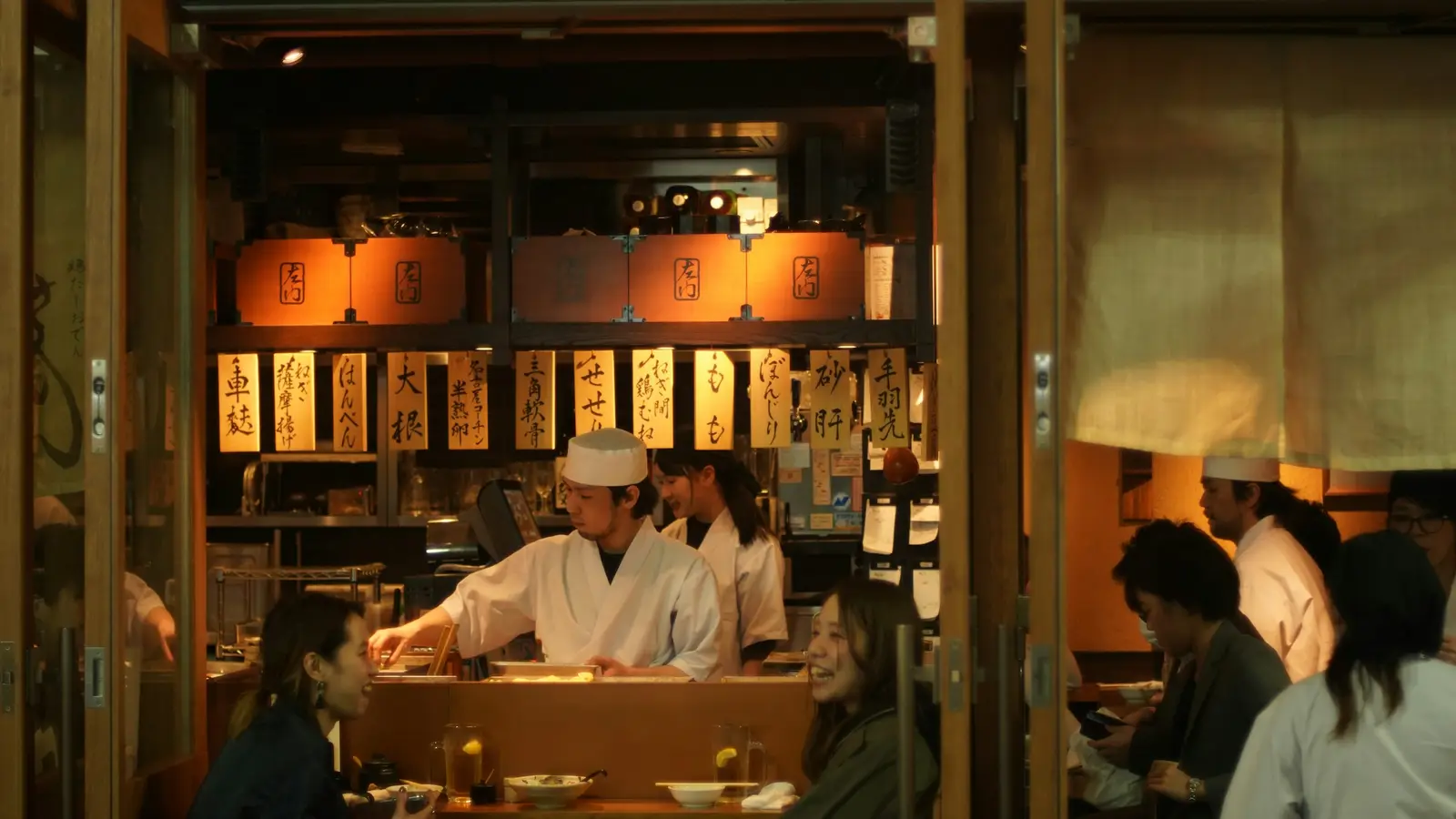
Most of the best meals in Japan happen at places with ten seats, one chef and no website. Getting into them is less about luck than about knowing which booking method each kind of restaurant uses. This guide covers all of them, from the easiest to the one that gets you into the places most travelers never see.
A lot of great food in Japan is walk-in only, and trying to book it is a waste of your time.
| Walk in, or queue | Book ahead |
|---|---|
| Ramen, udon, soba, curry | Sushi counters and omakase |
| Conveyor-belt sushi | Kaiseki and kappo |
| Most standing bars and casual izakaya | Popular yakiniku and wagyu restaurants |
| Gyudon, tonkatsu and teishoku set-meal shops | Small bistros with under fifteen seats |
| Food halls and yatai street stalls | Any group of four or more on a Friday or Saturday |
If there is a queue, that is the booking system. Japanese diners wait patiently for places worth it, and a line of locals at noon is one of the most reliable quality signals you'll find. We cover more of those signals in how to find where locals eat.
Several sites sell tables in English and take foreign cards. They are the easiest option when the restaurant you want is listed. The catch is coverage: they carry a fraction of Japan's restaurants, skewed toward higher-end places that actively court overseas guests, and some add a booking fee on top.
Use it for: well-known sushi and kaiseki restaurants that already work with tourists.
Tabelog, Hot Pepper Gourmet and Ikyu list far more restaurants, and many offer online booking. These sites are built for residents, though. Expect Japanese-only forms, and sometimes a membership that asks for a Japanese phone number. Browser translation gets you part of the way. Our Tabelog guide explains the parts that matter.
Use it for: mid-range restaurants with a visible online booking button (look for ネット予約).
A good concierge will call restaurants for you, and at top hotels they have relationships that open doors. Quality varies a lot, though. Business hotels and apartment rentals usually have no concierge, some desks only book the handful of places they know, and a few restaurants refuse concierge bookings after too many no-shows.
Use it for: famous restaurants, if you're staying somewhere with a serious concierge desk.
This is the only method that reaches every restaurant, and it is what locals do. It is also the hardest. You need to call from abroad during a narrow quiet window, which often falls in the middle of your night, and then hold a fast, polite conversation in Japanese. Our booking phrases guide and phrase builder give you a script. The call-time checker tells you when to dial.
Use it for: anything, if your Japanese is up to it.
A calling service phones the restaurant in Japanese on your behalf. Moshicall does this with an AI assistant: you paste the number, pick your date, time and how flexible you are, and it calls in the next quiet window. You get the answer, a recap of the call and a card in Japanese to show at the door. It is honest about being an AI, and you only pay if you get the table.
Use it for: the phone-only places that none of the other methods reach.
For most good neighbourhood restaurants, one to two weeks is plenty, and a few days is often enough midweek. Famous sushi and kaiseki counters can fill a month or more out, and some open their books on a fixed day each month. Groups and weekend nights need more lead time than a table for two on a Tuesday.
If your trip is close, don't give up. Cancellations happen, and small restaurants often have a seat on a weeknight even when the weekend is gone. Being flexible by half an hour either way makes a big difference.
Whatever the method, expect the same questions: date, time, number of people, a name, and a contact number. Travelers often don't have a Japanese number, and that is a real reason small restaurants hesitate: they can't reach you if something changes. Say you're traveling and offer an email or your hotel.
Some restaurants will also tell you about:
No-shows are the reason some restaurants in Japan have stopped taking bookings from overseas guests at all. If your plans change, cancel as early as you can by phone or on the platform you used. Every kept booking makes the next traveler's call a little easier.
Booking habits vary a lot between cities. Tokyo books furthest ahead, Kyoto eats early, and Osaka and Fukuoka are more walk-in friendly. Our city guides cover the neighbourhoods and what needs a booking in each:
Not for ramen, udon, curry, conveyor-belt sushi or most casual izakaya. You do for small sushi counters, kaiseki, popular yakiniku and anywhere with fewer than about fifteen seats, especially on Friday and Saturday nights.
One to two weeks is enough for most good neighbourhood restaurants. Famous sushi and kaiseki places can fill a month or more ahead, and some open bookings on a fixed day each month.
Yes. Use an English booking platform if the restaurant is listed on one, ask your hotel concierge, or use a calling service like Moshicall that phones the restaurant in Japanese for you.
Guide
Small counters, family-run kitchens and long-standing regulars: why phone booking survives in Japan, and how to book those places from abroad.
6 min read →
Guide
The exact Japanese you need to book a table: the opening line, numbers of people, times, and the words the restaurant will say back to you.
7 min read →
Guide
Why some restaurants in Japan stopped taking bookings from tourists, what cancellation fees usually look like, and how to cancel properly.
5 min read →
Tokyo
Where to eat in Tokyo beyond the tourist strips, which neighbourhoods need a booking, and how to get into the small places that only take calls.
8 min read →