Eating in Japan without a reservation: walk-ins, door signs and what to say
Which restaurants in Japan seat walk-ins, the best times to turn up, the door signs to read, and how to say you have no reservation in Japanese.
Updated · 6 min read
Which restaurants in Japan seat walk-ins, the best times to turn up, the door signs to read, and how to say you have no reservation in Japanese.
Updated · 6 min read
You don't need a reservation for most meals in Japan. Ramen, soba, curry, set-meal canteens, conveyor-belt sushi and most izakaya on a weeknight all seat people who simply turn up. What you need is to know which doors are open to walk-ins, what the sign on the door is telling you, and one sentence to say when the staff ask if you booked.
| Kind of place | Without a reservation | What to do |
|---|---|---|
| Ramen, udon, soba, curry, gyudon | Normal. Many take no bookings at all | Queue, buy a ticket at the machine if there is one |
| Set-meal canteens (teishoku), tonkatsu, tempura bowls | Normal at lunch | Go outside the lunch rush |
| Conveyor-belt sushi and family restaurants | Normal | Take a number or write your name on the list |
| Izakaya | Fine on weeknights and for two people | Book on Friday and Saturday, and for four or more |
| Yakiniku, okonomiyaki, yakitori | Often fine early in the evening | Popular small places fill up, so call the same day |
| Sushi counters, kaiseki, course-only restaurants | Rarely | Book. The food is bought for the guests who reserved |
| Any small place with a big reputation | Rarely | Book, usually by phone |
The last two rows are where travellers get caught. A counter with eight seats that buys its fish that morning for the people who reserved has nothing to serve a ninth guest. That is a question of supplies, not of who you are, and it is the same for everyone. Our guide to why so many restaurants only take bookings by phone explains how these places work.
For izakaya in particular, see do you need to book an izakaya.
Lonely Planet's guide to Tokyo dining etiquette puts the peak at roughly 11:30am to 1pm and 6pm to 7:30pm, and advises walk-ins to come outside those hours. It adds one warning: not in the middle of the afternoon, because restaurants are often closed between lunch and dinner. So the good slots are the first seating at lunch, the tail end of lunch, the first half hour of dinner service, and later in the evening.
Party size matters as much as the hour. The same guide notes that two seats are usually easy to find, four are harder, and more than four is a real problem. If you are five or six, book, or be ready to split across two tables. If you are alone, you have the advantage: see eating alone in Japan.
Kyoto eats and closes earlier than Tokyo or Osaka, so walking in late works less well there. Our Kyoto guide covers the hours.
Small restaurants tell you their status with a sign by the entrance. These are the ones worth recognising:
| Sign | Reading | Meaning |
|---|---|---|
| 営業中 | eigyō-chū | Open |
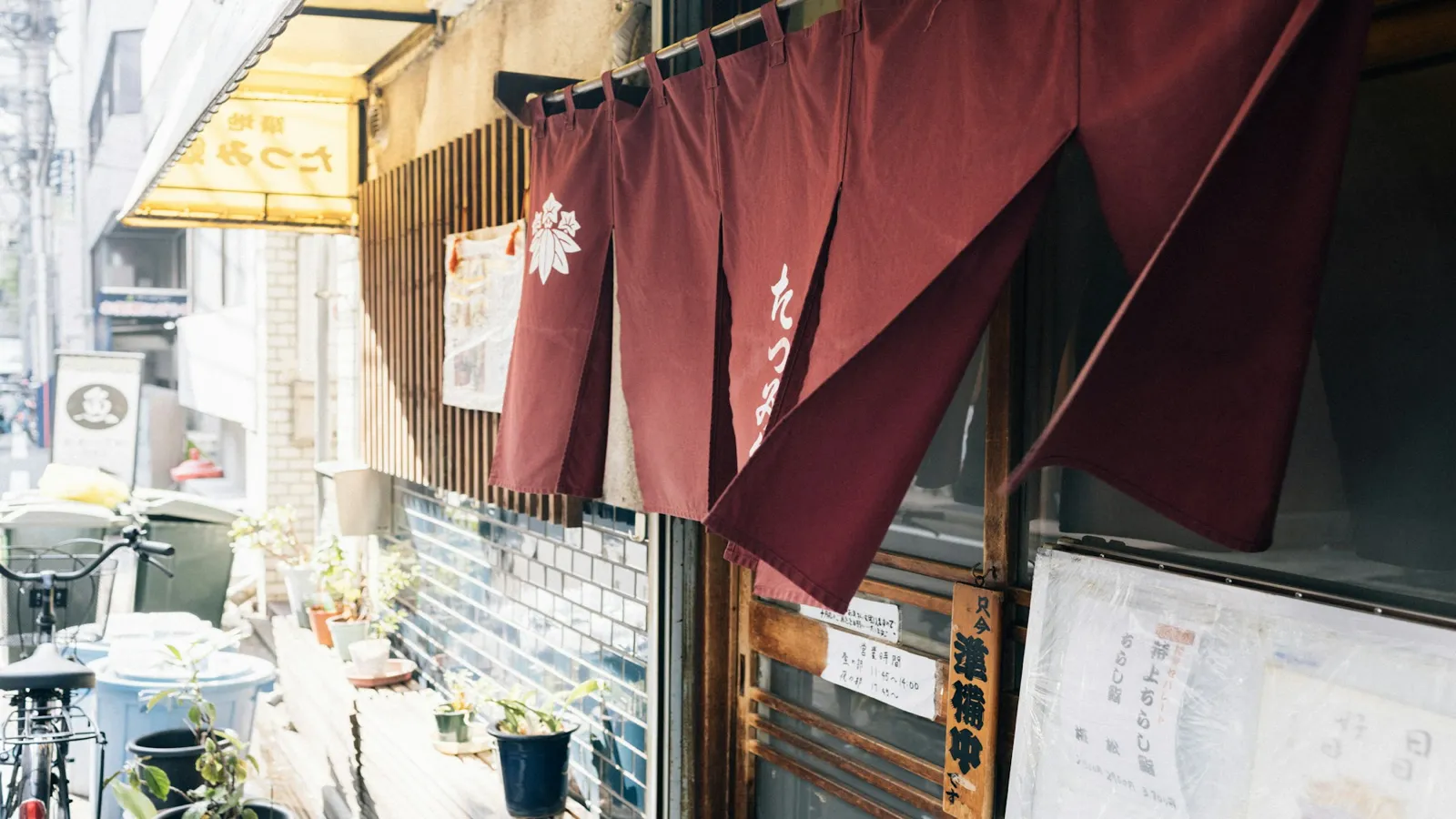
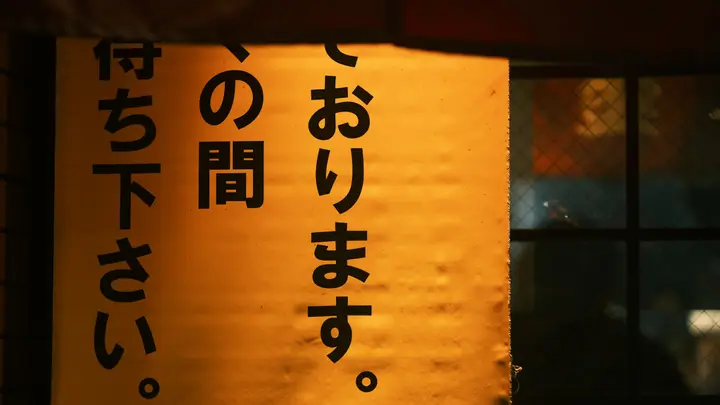
| 準備中 | junbi-chū | Preparing. Closed for now, usually between lunch and dinner |
| 満席 | manseki | Full |
| 本日貸切 | honjitsu kashikiri | Private party today |
| 完全予約制 | kanzen yoyaku-sei | Reservations only |
| 本日終了 or 売り切れ | honjitsu shūryō, urikire | Finished for today, sold out |
| 定休日 | teikyūbi | Regular closing day |
The photo at the top of this page shows the second one. The wooden board by the door reads 只今準備中です (tadaima junbi-chū desu, we are preparing right now), and the handwritten sheet beside it gives the hours: lunch from 11:45 to 14:00, dinner from 17:45. Turn up at 15:00 and that door stays shut.
Two systems confuse first-time visitors, and neither is a reservation.
The name list. Some restaurants keep a clipboard or a stand at the entrance where arriving guests write their name and the number of people. It only records the order of arrival. Lonely Planet's guide describes it and says to fill it in even when nobody else seems to be waiting, unless staff tell you otherwise. Look for 名前 (name) and 人 or 名 (people). Your name in the Roman alphabet is fine. If you give up, cross your line out so the staff don't call a table for nobody.
The ticket machine. At many ramen and gyudon shops you buy a meal ticket from a vending machine at the entrance and hand it to the staff, as japan-guide.com describes. There is no host and nothing to book. If there is a queue outside, check whether people bought their tickets before joining it or after, and do the same.
Queues themselves are simple: one line, in order of arrival.
Staff will greet you with irasshaimase and ask how many you are. At places that take bookings, they will also ask whether you reserved.
何名様ですか。
Nan-mei-sama desu ka.
How many people? (What you will hear.)
ご予約はされていますか。
Go-yoyaku wa sarete imasu ka.
Do you have a reservation? (What you will hear.)
予約していないんですが、入れますか。
Yoyaku shite inai n desu ga, hairemasu ka.
I don't have a reservation. Can we come in?
二人です。
Futari desu.
Two people.
カウンターでも大丈夫です。
Kauntā demo daijōbu desu.
The counter is fine.
Holding up fingers for the number works everywhere. So does the shortest version of all: yoyaku nashi desu, no reservation.
満席です。
Manseki desu.
We're full. (What you will hear.)
本日は予約のお客様のみです。
Honjitsu wa yoyaku no okyaku-sama nomi desu.
Today is for guests with reservations only. (What you will hear.)
どのくらい待ちますか。
Dono kurai machimasu ka.
How long is the wait?
何時なら空いていますか。
Nan-ji nara aite imasu ka.
What time would you have space?
明日の予約はできますか。
Ashita no yoyaku wa dekimasu ka.
Can I book for tomorrow?
Staff may also cross their forearms in an X, which means the same thing as manseki. It is not rude and it is not about you. Thank them and move on, or ask one of the questions above. Asking for a later time or for tomorrow while you are standing at the door is worth a try at a small place, because the person who decides is right in front of you. If the answer is still no, our guide to why a restaurant turned down your booking covers the usual reasons.
If there is one restaurant you would be sorry to miss, don't leave it to the door. A short call earlier in the day, or a few days before, settles it. The words are in our booking phrases guide, the phrase builder writes the script for your date and party, and the call-time checker shows when a kitchen is likely to pick up. For every other route, see how to book a restaurant in Japan.
A good rule for a whole trip: book the one meal each day you care most about, and walk in for the rest. Our guide to planning the restaurants of a Japan trip shows how that looks over a week.
Yoyaku shite inai n desu ga, hairemasu ka. It means: I don't have a reservation, can we come in? The short version is yoyaku nashi desu, no reservation.
Yes, at most casual places: ramen, udon, soba, curry, set-meal canteens, conveyor-belt sushi and most izakaya on a weeknight. Small sushi and kaiseki counters and course-only restaurants need a booking.
It means preparing: the restaurant is closed for now and will open later, usually for dinner. Many restaurants in Japan close between lunch and dinner.
A waiting list, not a reservation book. Write your name and the number of people on the next free line and wait to be called. If you leave, cross your line out.
Full. Staff may say manseki desu or cross their forearms in an X. Ask how long the wait is, or whether a later time or the next day is possible.
Guide
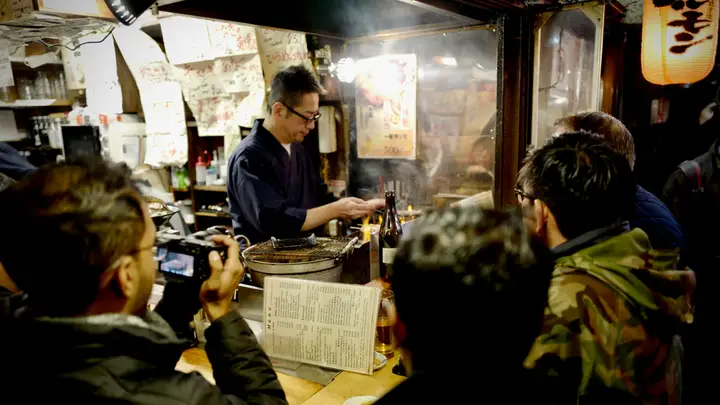
When you can walk into an izakaya, when you need to book, what otoshi and nomihoudai mean, and how groups get a table on a Friday night.
5 min read →
Guide
The exact Japanese you need to book a table: the opening line, numbers of people, times, and the words the restaurant will say back to you.
7 min read →
Guide
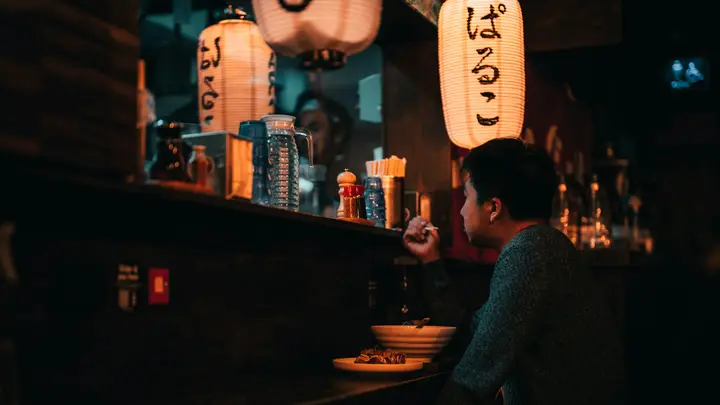
Japan is made for eating alone, until a booking form says two people minimum. Where solo diners do best, and how to get a seat for one at small places.
6 min read →
Guide
Manseki, chotto muzukashii, course only: what each refusal really means, the common reasons small restaurants say no, and how to still get a table.
6 min read →
Guide
Every way to get a table in Japan, from online platforms to hotel concierges to calling in Japanese, and which one to use for which kind of restaurant.
8 min read →