Search for a famous sushi counter in Tokyo and you will find it on a booking site in English, often on more than one. Search for the ten-seat place your friend loved in Osaka and you will usually find nothing but a phone number. The English booking sites are the easiest way to get a table in Japan when they work, and they work for a narrow slice of restaurants. This guide compares the main ones on what they actually charge you, when they take your money and what happens if you cancel.
We publish this page, and Moshicall is one of the options at the end. We have tried to keep the comparison to facts the platforms publish themselves. Fees and rules change, so check the restaurant's own page on the site before you pay.
What they cover
Mostly high-end sushi, kaiseki and well-known restaurants that court overseas guests
What they miss
Most small neighbourhood places, which still book by phone
Booking fees
From none (TableCheck) to ¥8,000 per seat (TableAll)
Cancelling
Often 50% to 100% of the course in the last few days
The main sites at a glance
TableAll
Pocket Concierge
OMAKASE
TableCheck
What it lists
High-end restaurants in Tokyo, Kyoto, Osaka, Fukuoka, Sapporo, Kanazawa and other cities
Fine dining, booked as a request to the restaurant
Sushi and other high-end counters, with an English version
A wide range, from hotel restaurants to izakaya, on the restaurants' own booking system
Fee to you
¥8,000 per seat, never refunded
See each listing
A handling fee per seat, shown on each restaurant's page
No booking fee to diners
When you pay
Card hold when you ask, charged once the restaurant confirms; course paid ahead
See each listing
As shown on each restaurant's page
Depends on the restaurant; some ask for a card to cover no-shows
Cancelling
Sliding scale; nothing back within 48 hours
In principle 50% two to three business days out, 100% the day before or on the day
Each restaurant's policy
Each restaurant's policy
When seats open
One to three months ahead, by restaurant
By restaurant
In rounds, with the next opening date on the page
By restaurant
Facts from each platform's own pages, read on 2026-11-18. Where a cell says "by restaurant" or "shown on the page", the platform leaves it to each listing.
TableAll
TableAll sells tables at high-end restaurants across Japan, from Tokyo and Kyoto to Kanazawa, Hiroshima and Niseko. The site is in English, and it takes the place of a hotel concierge: you book yourself.
The money works in two parts. There is a booking fee of ¥8,000 per seat, which TableAll does not refund in any case. On top of it you prepay the course; drinks and extras are paid at the restaurant. When you send a request your card gets a hold, not a charge, and it becomes a charge only when the restaurant confirms. If no table comes through, the hold is released within 72 hours.
Refunds on the course price slide with the date. Their FAQ gives the example of a Tokyo dinner for up to three people: cancel 8 to 14 days ahead and you get half of the price back, minus the booking fee; cancel within 48 hours and you get nothing. Restaurants open bookings one to three months out, and you can send a request early: TableAll emails you when the restaurant starts taking them.
Good for: one big-occasion dinner at a famous counter, when you are happy to pay for certainty and English all the way through. For a party of two, the booking fee alone is ¥16,000.
Pocket Concierge
Pocket Concierge also focuses on fine dining. You send a reservation request, and the restaurant accepts it or not. Its dining etiquette page states the cancellation rule plainly: in principle, cancelling two to three business days before the date costs 50%, and cancelling the day before or on the day costs 100%. It also says each restaurant can set its own policy, so read the one on the listing.
The same page explains two things worth knowing at any high-end restaurant in Japan. Courses often start at a fixed time for the whole counter, and arriving late can cost you the booking: they suggest being there ten minutes early. And items like matsutake or crab can be charged at market price.
Good for: a fine dining dinner where you want the restaurant's own terms laid out before you commit.
OMAKASE
OMAKASE (omakase.in) is a Japanese booking site with an English version, used by many sushi counters and other high-end restaurants. Each restaurant page shows its own handling fee per seat, its cancellation policy and the date the next round of bookings opens. When a counter releases seats in rounds, note the opening time in Japan time and be online for it.
Good for: sushi counters that sell their seats there and nowhere else. Our guide to booking sushi omakase covers the other routes for those.
TableCheck
TableCheck is different: it is the booking system restaurants use on their own websites, with a public portal and app on top. Its Japan portal lists everything from sushi and ramen to izakaya and restaurants with private rooms. TableCheck says it charges diners no extra booking fees. Deposits and cancellation fees are set by each restaurant, and some ask you to register a card when you book.
Good for: mid-range and hotel restaurants. If a restaurant's own website has a "reserve" button that opens TableCheck, book there and skip the middlemen.
What about Tabelog?
Tabelog is the site Japanese diners use to choose restaurants, and some listings take online bookings. Its booking is built for residents, though, and the English version shows fewer details than the Japanese one. Our Tabelog guide explains how to read a listing and spot the online booking button. When the button isn't there, the phone number on the listing is the way in.
The restaurants none of them reach
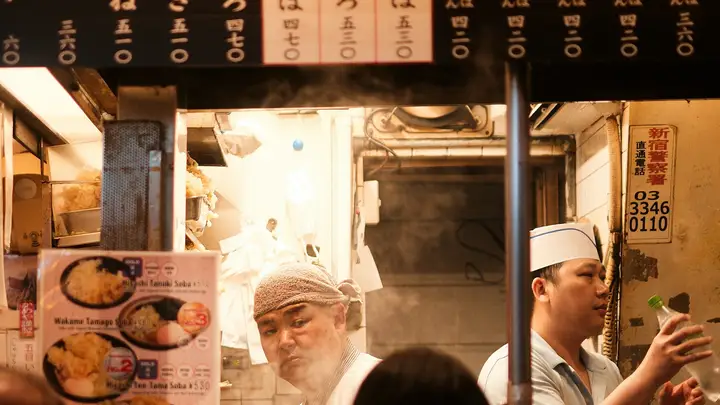
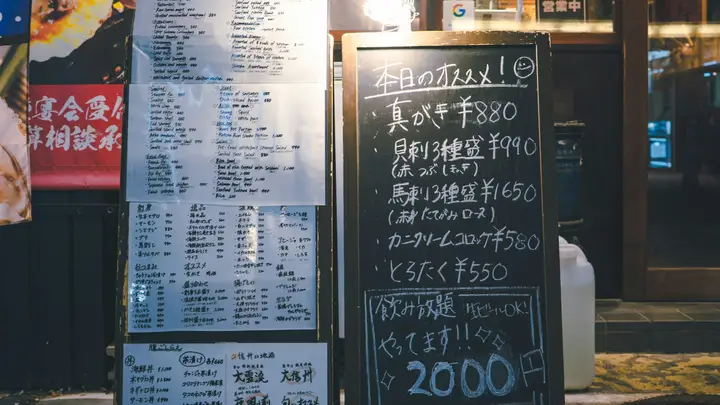
Put all these sites together and they still list a small share of Japan's restaurants. A family-run kappo, a neighbourhood yakitori counter or a tiny bistro with one cook often has no booking site at all, only a phone that rings in the quiet hours between lunch and dinner. That isn't a sign of a worse restaurant. It is how most of Japan still books. We explain why in why so many restaurants only take bookings by phone.
For those, your choices are a hotel concierge, calling yourself in Japanese, or having someone call for you. Moshicall does that last one with an AI assistant that phones the restaurant in Japanese, says it is an AI, and emails you the answer.
Which one to use
Check the restaurant's own website first. If it links to a booking system, that is the cheapest way in.
Look for it on the English sites. If it is only on TableAll or OMAKASE, that is where the seats are.
Compare the total, not the course price. A per-seat booking fee changes the sum a lot for two or four people.
Read the cancellation policy before you pay. In Japan, a short-notice cancellation at a high-end place is usually charged in full. Our guide to cancellation fees covers what is normal.
No listing at all? It books by phone. Call, ask your hotel, or have us call.
Before you pay: a short checklist
The date and time are in Japan time, and the course start time is fixed.
You know the full price per person: course, booking fee, and whether drinks are included.
You know when the card is charged and when the refund window closes.
TableAll charges a booking fee of 8,000 yen per seat, which it does not refund. The course is prepaid on top of it, and drinks and extras are paid at the restaurant.
Is TableCheck free for diners?
+
TableCheck says it charges diners no extra booking fees. Deposits and cancellation fees are set by each restaurant, and some ask you to register a card when you book.
What does Pocket Concierge charge if I cancel?
+
Its etiquette page says that in principle, cancelling two to three business days before costs 50%, and cancelling the day before or on the day costs 100%. Each restaurant can set its own policy.
Can I book any restaurant in Japan through these sites?
+
No. They list a small share of Japan's restaurants, mostly high-end ones. Most small neighbourhood places still take bookings only by phone.